
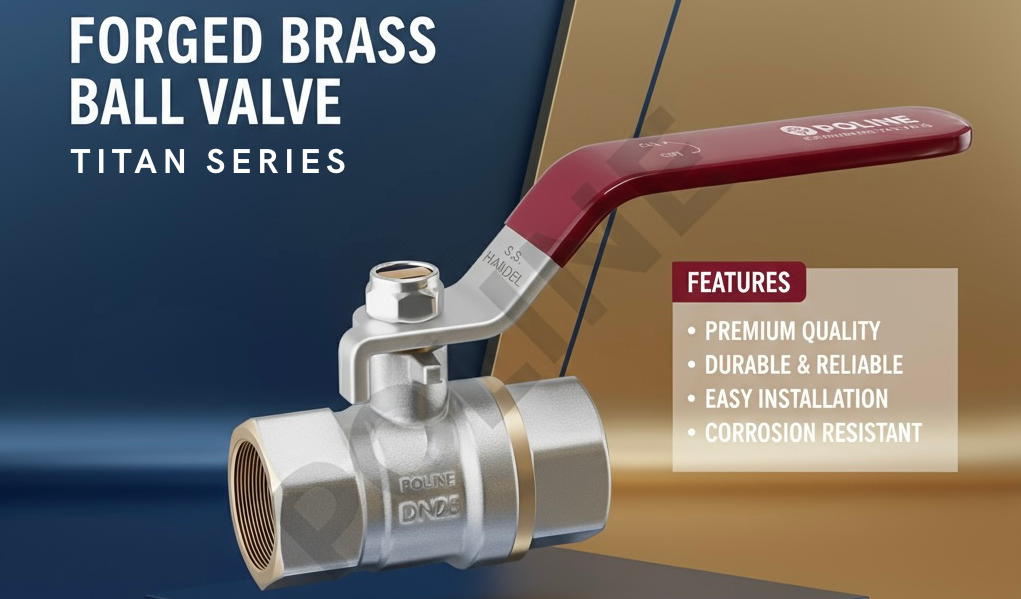
In most gas and water installations, the small valve is the last thing people think about – until it starts leaking or gets jammed. A forged brass ball valve is designed to handle pressure, temperature changes, and daily operation without developing cracks or porosity-related leaks. For PNG/LPG lines, booster pump systems, and industrial utilities, choosing a reliable forged brass valve can decide whether your installation works smoothly for years or keeps giving complaints. In this blog, we will explain what a forged brass ball valve is, why forging makes it stronger than regular cast valves, where it should be used, and what you must check before buying it for your next project.
What Is a Forged Brass Ball Valve?
A forged brass ball valve is a quarter turn shut off valve made from a forged brass body with a rotating ball inside. The ball has a machined hole (port) through its centre; when the handle turns the ball 90 degrees, the port either aligns with the pipeline to allow flow or turns perpendicular to shut the flow completely. The valve typically consists of a forged brass body, precisely machined ball, stem, PTFE seats, seals, and a lever or butterfly handle.
Brass as a material offers a good combination of strength, machinability, and corrosion resistance in water, air, and many gas applications. When this brass is forged instead of cast, the body becomes denser and more robust, which is especially important for gas safety and long term leak tightness.
Why Forging Makes the Valve Stronger
Forging is a process where a heated brass bar or billet is pressed into shape under high pressure rather than being poured as liquid into a mould. This mechanical working of the metal refines the grain structure and aligns it along the shape of the body. As a result, the forged brass body has higher tensile strength, better impact resistance, and lower risk of crack formation under pressure and vibration.
Compared to casting, forging drastically reduces internal porosity and hidden air pockets inside the valve body. Those microscopic cavities are common reasons for seepage, sweating, or sudden failures in cheaper valves. A forged brass ball valve offers a denser wall with more uniform thickness, so the seats press more uniformly and sealing performance improves. For the installer or OEM, this means fewer returns, fewer leakage complaints, and better confidence when the valve is used in critical points like gas risers or pump discharge lines.
Key Advantages for Installers, OEMs, and Contractors
Forged brass ball valves offer several practical benefits that make them a preferred choice for professional installations:
- High mechanical strength under pressure and temperature variations, giving better safety margins in real site conditions
- Excellent sealing performance because of dense forged walls, accurate machining, and proper seat loading.
- Good corrosion resistance in domestic and commercial water, air, and many gas applications when correct brass grade and plating are used.
- Smooth quarter turn operation with low handle torque, making it easy for end users to open and close.
- Availability in multiple sizes, end connections (BSP female, compression, union type, etc.), and handle styles to suit different piping layouts.
- Longer service life and reduced maintenance, which directly reduces downtime and replacement costs for the plant or building.
For OEMs, the combination of consistent performance, strong body, and reliable sealing means fewer warranty claims and a more stable reputation with their own customers.
Typical Applications in Indian Conditions
Forged brass ball valves are used across residential, commercial, and industrial projects. For a manufacturer like Poline, some of the most common application areas include:
- PNG/LPG distribution lines in apartments, housing societies, and commercial kitchens
- Domestic and commercial water lines, including inlet isolation and booster pump discharge lines.
- RO plant lines, softener lines, and small process lines in commercial buildings.
- HVAC and chiller piping where compact, reliable isolation is required on branches and equipment.
- Compressed air lines, inert gas lines, and light industrial utilities within factories.
- Because of their compact size and reliable shut off, forged brass ball valves are often selected as the “last isolation point” before appliances, equipment, or meters.
A Real World Scenario from the Field
Imagine a high rise building where the gas riser and floor wise branches were originally fitted with low cost, thin wall valves. Within one to two years, residents started reporting minor gas smell near some flats, and maintenance teams found sweating and micro leakage on valve bodies and threads. Every complaint meant sending a team, shutting gas, and replacing valves under pressure from residents and the gas company.
When the contractor shifted to good quality forged brass ball valves with proper wall thickness, tested threads, and 100% leakage testing at the factory, the failure rate dropped sharply. Over the next couple of years, the number of leakage complaints went down, maintenance visits reduced, and trust with the gas agency improved. This is exactly the kind of long term reliability that a forged brass ball valve is designed to deliver.
Checklist Before Buying a Forged Brass Ball Valve
Before you finalise a valve for gas, water, or industrial use, run through a quick checklist so that you are not selecting only on price:
- Material and forging quality
- Confirm the brass grade and ensure the body is forged, not poorly cast.
- Ask about grain structure benefits and whether the supplier can share basic material data.
- Pressure and temperature rating
- Check the valve’s working pressure and test pressure against your system design.
- Ensure its temperature range is suitable for your media and operating environment.
- Machining and thread quality
- Inspect threads for clean, accurate machining with no burrs or deformation.
- Check internal bore smoothness and ball finish for good flow and sealing.
- Surface finish and plating
- Look for uniform nickel/chrome plating where required, without blistering or peeling.
- Make sure the handle and fasteners are protected appropriately against corrosion.
- Testing and standards
- Confirm 100% hydro and/or air leakage testing on each piece, not only random samples.
- For gas applications, check compliance with relevant EN/IS/API standards as applicable.
- Documentation and traceability
- Ask for test certificates, batch numbers, and basic traceability to support audits and inspections.
When you tick all these points, you move away from guesswork and choose a valve that will support your reputation long after the project is handed over.
How Poline Can Support Your Next Project
Selecting the right forged brass ball valve is not just about size and price; it is about safety, reliability, and long term trust with your customer. As a specialised manufacturer, Poline can help you choose the correct valve configuration for gas, water, HVAC, and utility lines, and support you with testing, documents, and technical clarifications. Whether you are an OEM, gas installer, EPC contractor, or building maintenance team, you can reach out to us to discuss your application and get a valve solution that fits it correctly.
If you are planning a new project or facing repeated leakage or failure issues with existing valves, this is a good time to switch to robust forged brass ball valves and see the difference in performance over the life of the installation.